

Command With Confidence
Train for the Decisions That Matter.
ASCENT's 40-hour Incident Commander program transforms incident command knowledge into practical, repeatable skills through realistic emergency simulations, experienced instructors, and progressive command exercises.
Students develop the confidence to establish command, manage resources, implement an Incident Action Plan, recognize changing conditions, and lead emergency operations safely and effectively.
New for 2027: Every student receives ASCENT's Incident Commander textbook, developed specifically to support our instructional approach and simulation-based training.
ASCENT's ICS 1026: $575; 40 hours
Quick Facts
Duration: 5 days / 40 hours — Approximately 8 hours of command principles, strategy, and planning, integrated with 32 hours of progressive, simulation-based instruction and application.
Standards: Aligned with NFPA 1026 (2024 Edition) — Incident Commander Professional Qualifications.
Simulations: Progressive incident command scenarios ranging from NIMS Type 5 and Type 4 incidents to increasingly complex multi-company and multi-alarm operations, including residential and commercial fires, technical rescues, industrial emergencies, aircraft incidents, and other all-hazards events.
Class Size: Minimum 12 / Maximum 20 students for maximum command opportunities, instructor interaction, and personalized feedback.
Tuition: $575 per student (purchase order) / $592 by credit card, including the $17 processing fee. Additional travel expenses may apply to courses hosted outside ASCENT's standard service area.
NEW FOR 2027 — Textbook Included: Every student receives ASCENT's Incident Commander Textbook, designed to complement the curriculum, reinforce command principles, and support simulation-based learning.
Host This Course: Bring ASCENT's Incident Commander training to your department. We manage registration, scheduling, and administration, with special host-agency pricing available.
What We Teach — Practical Command Competencies
Our goal is not simply to teach the Incident Command System. It is to develop confident, competent Incident Commanders who manage emergency incidents safely and effectively.
By the end of this 40-hour program, participants will be able to:
-
Establish and Maintain Command: Deliver initial radio reports, establish command, perform size-ups, and manage command transfers.
-
Develop and Implement Incident Action Plans: Set strategic priorities and objectives, then coordinate tactical assignments based on resources and changing conditions.
-
Apply Recognition-Primed Decision-Making: Make timely, informed decisions under pressure while evaluating risk, progress, and conditions.
-
Manage Resources and Accountability: Maintain span of control, organize resources, establish divisions and groups, and ensure personnel accountability.
-
Coordinate Multi-Company Operations: Integrate engine, ladder, rescue, and specialized companies through clear communications, coordinated tactical assignments, and a unified Incident Action Plan.
-
Manage Changing Incident Conditions: Recognize deteriorating conditions, evaluate tactics, adjust strategy, and anticipate resource needs.
-
Manage Emergency and MAYDAY Operations: Recognize firefighter emergencies, initiate procedures, and coordinate rescue operations while maintaining command.
-
Apply and Refine Command Skills Through Simulation: Demonstrate command principles during increasingly challenging incidents, receive immediate performance feedback, and improve through repetition.
Our Training Difference
Less time listening. More time commanding.
ASCENT combines experienced fire service instructors, structured instruction, and immersive simulations to develop practical command skills. Students repeatedly command realistic incidents and receive individualized feedback to strengthen decision-making, situational awareness, and command effectiveness.


Why Choose ASCENT's Incident Commander Course?
Because knowing ICS and commanding an emergency incident are two different things.
As incidents escalate, Incident Commanders must make timely decisions, manage resources, recognize changing conditions, and maintain control.
ASCENT's 40-hour, NFPA 1026-aligned program goes beyond classroom instruction, combining practical command principles with progressive, realistic simulations to develop confident, competent Incident Commanders.
Students don't just learn what an Incident Commander should do — they repeatedly practice doing it.
Realistic Training. Real Decisions. Real Improvement.
No prerecorded exercises. No passive participation. No shortcuts.
Our instructor-led program immerses students in evolving emergency scenarios that challenge them to establish command, develop Incident Action Plans, coordinate companies, manage risk, and respond to unexpected developments.
Students repeatedly serve in command and supporting roles, developing the ability to manage incidents from both company officer and chief officer perspectives.
Experienced fire service instructors provide immediate, individualized feedback, helping students refine decision-making, strengthen situational awareness, and improve command performance with every simulation.
The objective is simple: Build command competency through instruction, application, evaluation, and repetition.
Host the Course. Maximize Your Training Investment.
Bring ASCENT's Incident Commander program to your department for high-impact command training without the cost of sending personnel away for a week.
Hosting departments benefit from:
-
Preferred hosting arrangements and potential tuition discounts.
-
Reduced travel expenses for participating personnel.
-
Regional training opportunities for neighboring departments and mutual aid partners.
-
Simplified administration: ASCENT manages registration, student communications, and coordination.
-
Consistent command training to improve coordination among responding departments.
You provide the location. ASCENT handles instruction, simulations, and registration.
No Subscription Fees. No Recurring Costs.
ASCENT's Incident Commander course is a one-time investment with no required subscriptions or platform fees.
40 hours of documented professional development training.
Documentation supports your department's continuing education records.
Ready to Develop Stronger Incident Commanders?
Ready to strengthen your command skills? Register for an upcoming 2027 Incident Commander course or contact ASCENT to bring this training directly to your department.
Interested in bringing this program to your department? Contact ASCENT to discuss hosting, scheduling, and pricing options.
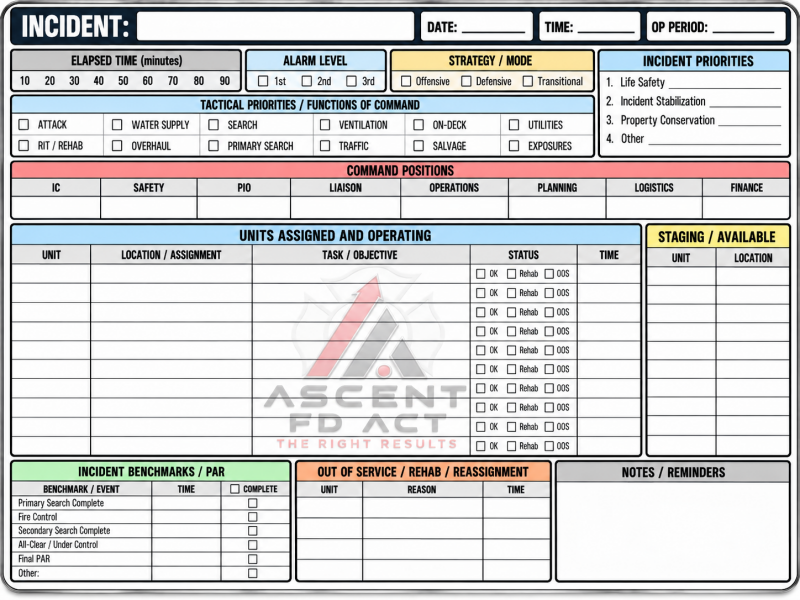
ASCENT's Sim Lab: $275; 16 hours
You wouldn't expect firefighters to maintain proficiency without regularly practicing their skills. Why should incident command be any different?
16-Hour Command Simulation Lab
Command Skills Are Perishable. Keep Yours Sharp.
Two Days. Realistic Incidents. Repeated Command Experience.
ASCENT FD ACT's 16-Hour Command Simulation Lab is a two-day, performance-based program for company officers, chief officers, and aspiring Incident Commanders who want to develop and maintain command skills.
Whether your department uses Functions of Command, Incident Priorities, or both, our simulations let you apply your command practices in realistic, challenging environments.
Less Lecture. More Command.
After a brief orientation to our simulation technology, communications equipment, and command procedures, students spend nearly the entire program managing realistic emergency incidents.
Our structured rotations maximize opportunities for participants to serve in command positions, observe different command approaches, and learn from instructor-led scenario evaluations.
Participants rotate through command and supporting roles in progressively challenging scenarios that require them to:
-
Make Critical Decisions: Recognize changing conditions, evaluate risk, and make timely tactical decisions.
-
Maintain Situational Awareness: Monitor progress, anticipate problems, and adjust strategies.
-
Manage Resources: Coordinate companies, maintain span of control, and organize operations.
-
Develop and Adjust Incident Action Plans: Set objectives, assign resources, and adapt to changing conditions.
-
Demonstrate Command Presence: Communicate clearly, maintain control, and lead with confidence.
Each simulation includes immediate instructor feedback, self-evaluation, and improvement.
This is not another classroom lecture. It is a chance to practice commanding incidents before doing so in the real world.
Program Highlights
-
16 hours of intensive, simulation-based command training.
-
Realistic, evolving emergency incident scenarios.
-
Repeated command decision-making practice.
-
Immediate coaching and individualized feedback.
-
Focus on situational awareness, risk management, communication, and incident organization.
-
For current and aspiring officers and experienced Incident Commanders seeking professional development.
Bring the Command Simulation Lab to Your Department
Duration: 2 days / 16 hours
Minimum Enrollment: 10 students
Maximum Enrollment: 16 students
Tuition: $275 per student
Hosting Opportunities: ASCENT brings instructors, simulation technology, and training to your department. Invite neighboring departments and mutual aid partners to build stronger, more consistent command practices across your response area.
Train Today. Command Better Tomorrow.
Command proficiency is not maintained through experience alone. It requires deliberate practice, repetition, and continuous improvement.
ASCENT's Command Simulation Lab provides the opportunity to sharpen decision-making, reinforce command fundamentals, and build confidence through realistic emergency simulations.
Contact ASCENT FD ACT today to bring the 16-Hour Command Simulation Lab to your department.
*Textbook not included.
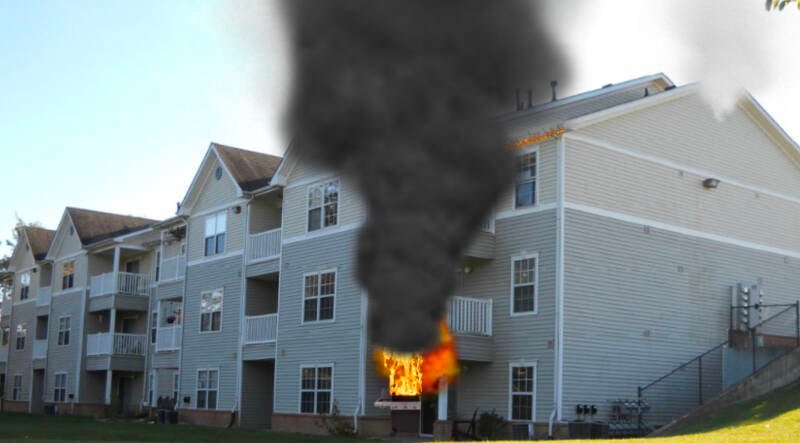

Request a demo of the software we use so you can maintain your skills.
Use this button when you are a part of our ICS, ISO or Fire Officer Courses.
Our Instructors for Incident Commander NFPA 1026
Real-world command wisdom, delivered by experienced chief-level instructors.

Jim Steele
Fire Chief (retired)
Van Wert, OH

Allen Scott
Fire Chief (retired)
Prairie Township, OH

Charles Rielage
Asst. Chief (retired)
Tipp City, OH

Rob Morton
Battalion Chief,
Washington Township (Dublin), OH

Brian Taylor
Fire Chief
Berlin Township, OH
Upcoming 2027 Classes:
Interested in attending an upcoming course? Contact ASCENT for scheduling information or to discuss bringing this training to your department.
Comments from our students:
"The Cadre of instructors brought a wealth of knowledge to the students, and the scenario-based course format was exactly what was needed to illustrate the importance of command and control of emergency incidents. Highly recommend this class." - DC Michael Guadagno, Moraine FD
"Well thought-out class. Good simulations, given the limitations of the software. Heavy on practical application, which was the stated intent of the course. I also appreciate the adaptability to different IC styles and departmental procedures." - Deputy Chief Jeff Bruggeman, Xenia FD
"Excellent class in building confidence in running incident command. Instructors are very knowledgeable and professional." - Matt Fahncke, Englewood FD
"Great experience that impressed me. I feel immensely more comfortable commanding any type of scene due to the many reps and instruction from this class." - Capt. Chris Klug, Middletown FD
"It was beneficial working with firefighters from other fire departments to see how they do things. Great teamwork!" - Capt. John Scranton, Middletown FD
"After taking traditional FEMA courses in incident command, this class led itself to be more of a fire ground operation class. It was nice to have the opportunity to use common department vernacular and operations. The amount of repetitions in different roles was overwhelming in a positive way. I would recommend this course to any company officer looking for command experience." - Lt. Tad Parks, Washington Twp. FD (Montgomery County, OH)